

Teaching Kids Responsibility
By: Ben Glassman
One of the most tangible ways that we can teach our children responsibility and multiply our own efficiency as a family is to start building work habits from a young age. Here is how two moms handle chores in their homes followed by a list of tasks (by age) you can start incorporating into your family routine.
Rachel
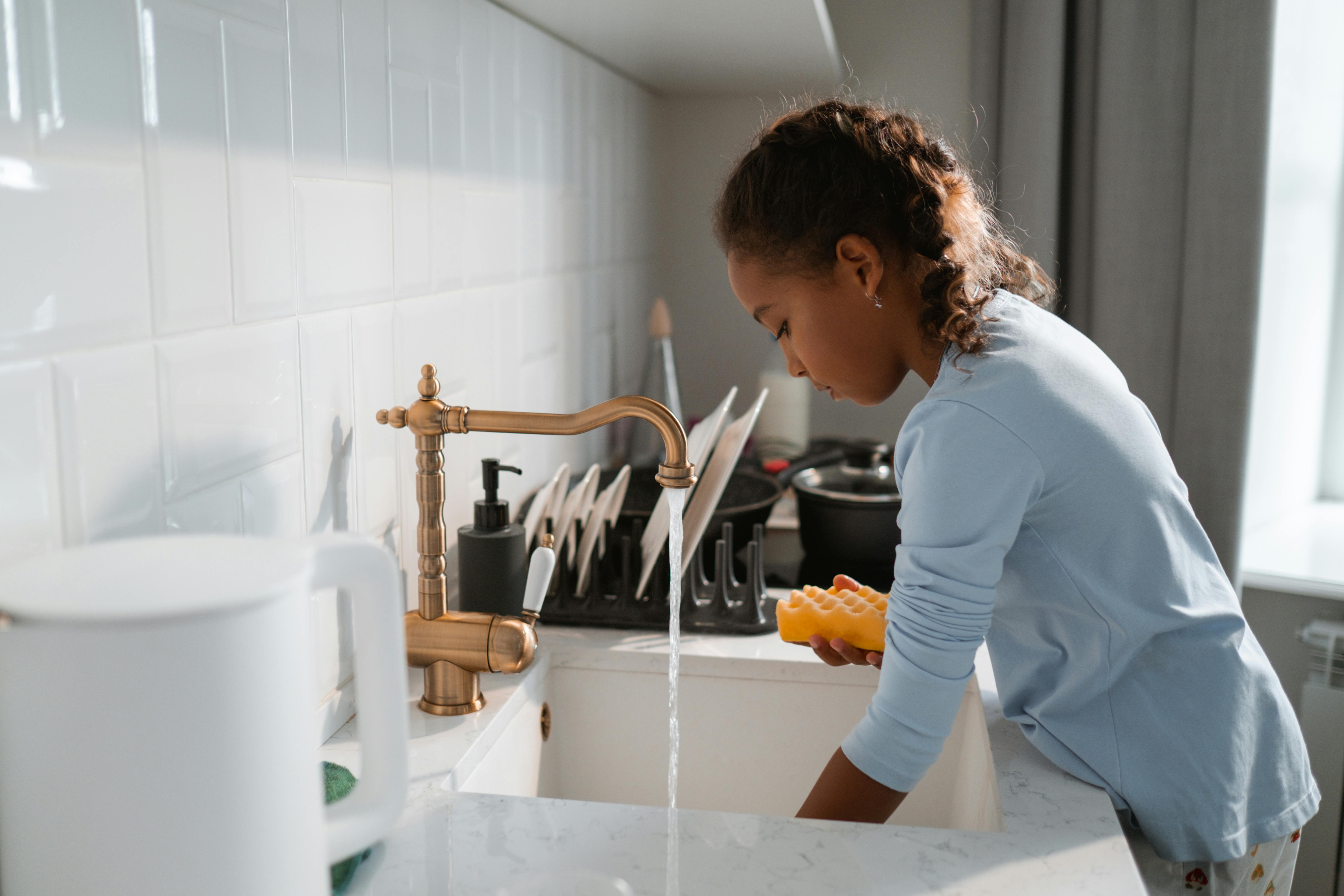
Our children are just coming into the age where we are starting to incorporate more intentionality in how we handle chores. While some families may choose to give their children an allowance for chores (and there’s certainly nothing wrong with this), we have chosen to treat chores as a way to build unity and a sense of team, framing tasks as contributions necessary to support the good of the family and just a part of daily life. We also seek to use chores as a way to build connections (unloading the dishwasher together, family laundry sessions, and daily tidy time). Our girls (ages 4 and 6) often work together to accomplish chores.
We also implement a “when-then” system (“When you finish _____, then we can go play at the park.”). Our goal is to teach responsibility, independence, and work ethic from a young age, while also capitalizing on a child’s natural desire to “help” while they are young to teach simple tasks. We have also found that chore time is usually a great opportunity to disciple young hearts who may not always be super excited about completing a task. Even I sometimes struggle to find the motivation to do the dishes, so family-based chores are a way to model consistency and fortitude (sometimes we just do the thing even when we don’t want to), as well as practical ways to make mundane responsibilities more bearable or even fun (ex: put on a fun song while you put away toys or listen to an audiobook together while you clean up after dinner).

Megan
Making home a welcoming and life giving place is not a simple task. It requires habitual awareness of what needs to be tidied, cleaned, and beautified. Often in our modern culture many of these tasks have been outsourced to cleaning services and interior designers as we seek the support we desperately need. I’m not saying these services shouldn’t be used, but I question if we’ve used them as a support or as a replacement. We don’t want to miss the opportunity to train our kids in the ways of homemaking and hospitality. Not only does teaching your kids to properly clean a toilet and mop a floor set them up for their future where they too will have to care for a home, but once trained it greatly reduces the load you have to carry to do these tasks alone. As we invite our kids to come alongside us when they are young and train them as they go, soon you can together deep clean the whole house in 2 hours if you all work together. This is what we have done.
Our family has a rotating daily chore that mostly focuses on tidying type tasks. Right now for the ages of our kids (10,9,7,6,1) and the size of our house what has worked best is each kid gets assigned a room of the house for that day. When it’s “morning jobs” time they are in charge of making sure that room is done well. We started this off with all going to each room and demonstrating what was expected in that specific room and of course reminders are still needed, “Oh you didn’t move the chairs to sweep under the table” or “the book goes all the way onto the bookshelf, not on the floor right in front of the shelf.”
Then we also incorporate a weekly family cleaning day into our schedule that focuses more on deep cleaning. Things like cleaning bathrooms, dusting, scrubbing dirty handprints off walls, mopping, vacuuming the stairs, etc. It’s remarkable what you can get done with 7 people working together, blasting music, and scrubbing stuff. This also rotates on a 4 week schedule, each person has specific tasks that switch each week for 4 weeks, then it starts again. Once we’ve done 4 good family cleaning days we celebrate with going to In-n-out for dinner.
Training our kids in these ways will always include levels of resistance, there will be a bounty of opportunities for lessons on grumbling and complaining, perseverance, discipline, doing things we don’t want to do because they are good, etc. Although it may feel like an uphill battle at times, it pays dividends not only for your children’s character but for the caretaking of your home as well.
Age Appropriate Chore Lists
Toddlers (2-3): Focus on helping and mimicking
- Sorting laundry (with parent’s help)
- Putting laundry from the washing machine into the dryer
- Unloading groceries (carrying in light bags, taking things out of bags)
- Putting toys away in a bin/basket
- Helping feed pets (with parent’s help)
- Wipe up small spills
- Put dirty clothes in laundry basket
- Throw trash in the trash can
- Help make bed (pulling covers back, smoothing, put pillows and stuffed animals back on bed in the right spot)
- Take plate from the table to the counter, put silverware in the sink
Preschoolers (4-5): Focus on creating routines and taking ownership over simple tasks
- Setting and clearing the table
- Watering plants
- Dusting
- Matching socks
- Putting clean laundry in bins (unfolded)
- Fold small towels or washcloths
- Clean up bedroom/toy areas
- Wipe down counters
- Help in the kitchen with meal prep (cutting fruit/veggies with kid-friendly knives, stirring, cracking eggs, adding ingredients, etc.)
- Take plate to sink after meals (scrape food into trash beforehand if needed)
- Put shoes away in the correct location
- Put backpack away after school when applicable
- Start getting ready independently in the morning (get up, brush teeth, get dressed)
- Help with weeding the garden
Early Elementary (6-7): Focus on building independence
- Sweep/vacuum
- Help pack own lunch/snacks when applicable
- Make bed
- Put away laundry in clean bins (work on folding if desired)
- Empty small trash cans
- Load/unload dishwasher (start with silverware and then move on from there)
- Continue helping with meals, learning more kitchen skills
- Feed pets (independently)
- Wipe counters
- Unload backpack/lunchbox when applicable
- Bathe/shower independently, hang up towel
- Wake up independently (consider using an alarm clock)
- Help with simple tasks related to care of younger siblings (assist mom with diaper changes, fetch needed supplies, help entertain)
Upper Elementary (8-10): Focus on consistency with independence and advancing to greater skills
- Wash dishes or load/unload full dishwasher
- Vacuum/sweep/mop entire rooms
- Take out trash
- Fold and put away all laundry
- Clean bathroom sink/mirror
- Make simple meals/snacks independently
- Rake leaves, begin learning yard care skills
- Walk dog (with supervision if needed)
- Strip bedding, wash sheets, and put them back on bed
Middle School (11-13ish): Focus on full responsibility, time management, independence without reminders
- Clean entire bathroom
- Do laundry start to finish
- Cook full simple meals (with stove supervision if needed)
- Help babysit and care for younger siblings
- Mow lawn
- Help with grocery shopping
- Wash car
- Organize a room or closet
- Get ready for school/sports/activities independently (dressed appropriately, gather needed supplies, practice, etc.)
Teens (14+): Focus on learning life skills and major household contribution
- Learn how to budget and utilize with personal earnings
- Grocery shop independently using a list
- Deep clean
- Cook dinner independently
- Manage own schedule
- Babysit independently
- Run errands (once able to drive)
- Schedule own appointments
- Help with DIY projects, house/vehicle maintenance
- Learn how to complete a job application, fill out medical/financial forms, etc.

